
Some places impress you with luxury. Others stay with you because of how they make you feel. El Tránsito belongs to the second group.
Tucked away on Nicaragua’s Pacific coast, this small fishing village has quietly become one of the country’s favourite destinations for surfers, yogis and travellers looking for something increasingly difficult to find: authenticity.
There are no shopping malls, beach clubs or luxury promenades here.
Instead, you’ll find fishermen launching their boats before sunrise, neighbours chatting outside their homes, children playing football on the beach after school and spectacular sunsets that naturally bring everyone together along the shoreline.
Tourism exists, but it hasn’t replaced everyday life. That balance is what makes El Tránsito so special. Visitors don’t come here because there’s always something to do. They come because, for a few days, they discover what it feels like to do a little less.
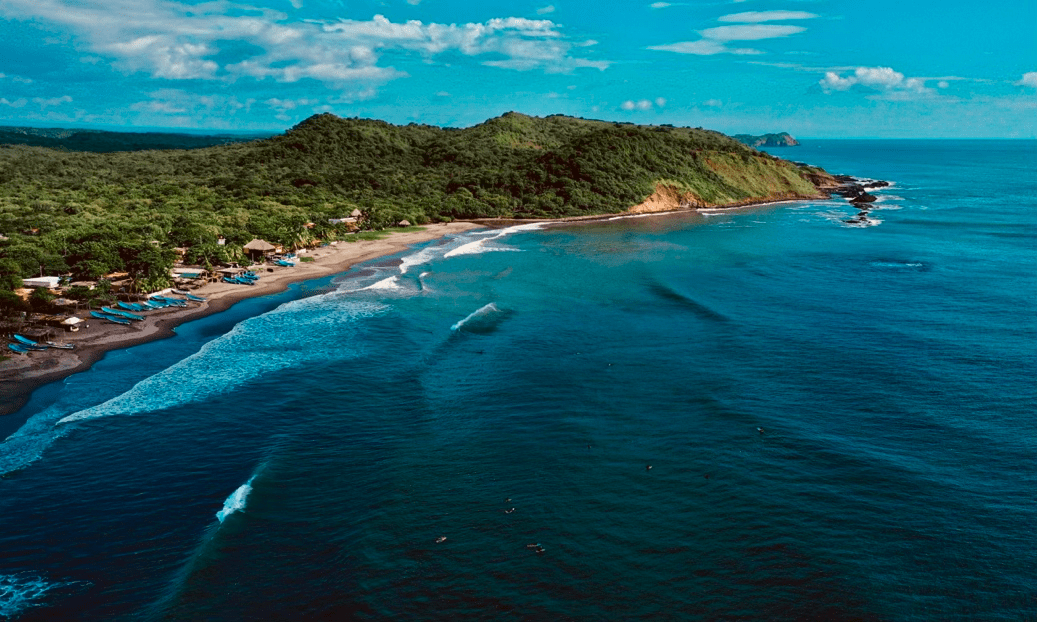
Where is El Tránsito?
Its location offers one of the best combinations for travellers visiting Nicaragua.
It’s close enough to reach comfortably after an international flight, yet far enough from the capital that the atmosphere changes completely.
By the time you arrive, busy roads have been replaced by ocean waves, fishing boats and quiet village streets.
The journey is part of the adventure
Reaching El Tránsito already feels like the beginning of the holiday.
Leaving Managua, the scenery gradually changes from city streets to open countryside, small villages and volcanic landscapes that remind you just how diverse Nicaragua is.
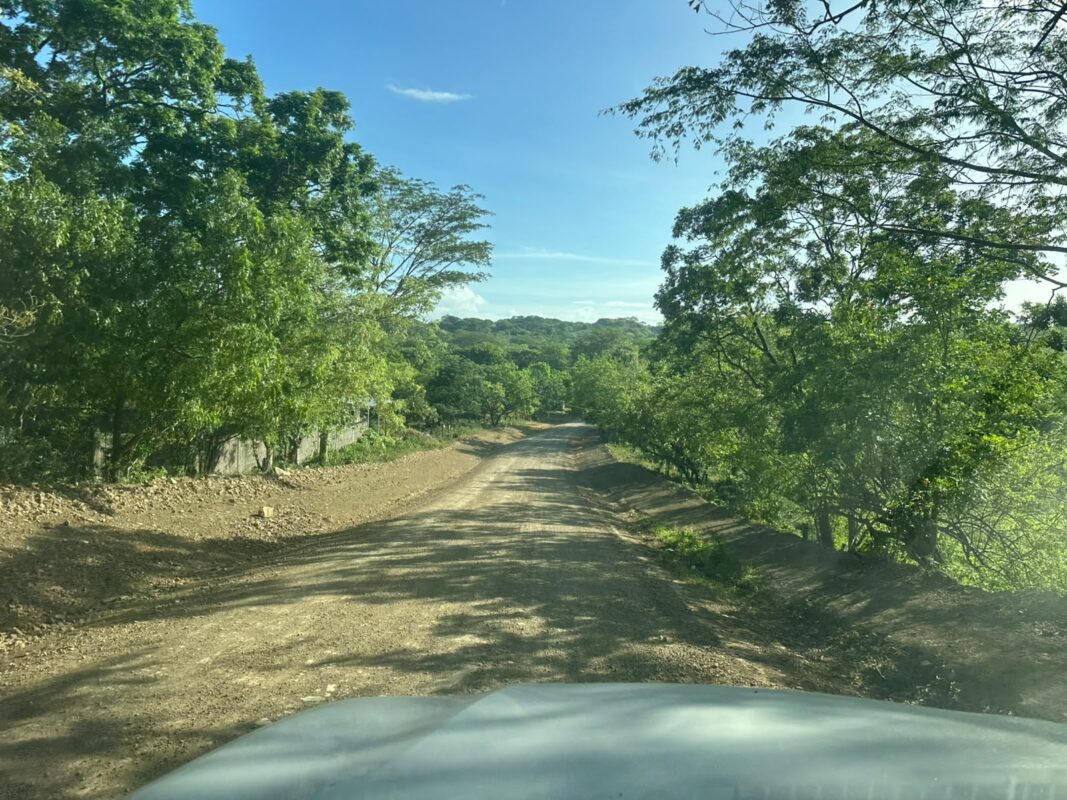
Then comes the final stretch. Many first-time visitors expect this part of the journey to feel inconvenient.
Instead, it often becomes one of the most memorable moments of the trip.
Traditional homes appear between fields, horses graze beside the road and life slows noticeably. It feels less like driving towards a tourist destination and more like discovering somewhere quietly hidden from the rest of the world.
As you enter El Tránsito, you’ll first pass the local church and the village school. Moments later, the Pacific Ocean suddenly appears.
For many visitors, that’s the moment they realise they’ve arrived somewhere completely different.
What makes El Tránsito different?
Nicaragua has several excellent surf destinations, each with its own personality. El Tránsito’s greatest strength is that it has never stopped being a real village.
Tourism hasn’t replaced local life—it has simply become part of it.
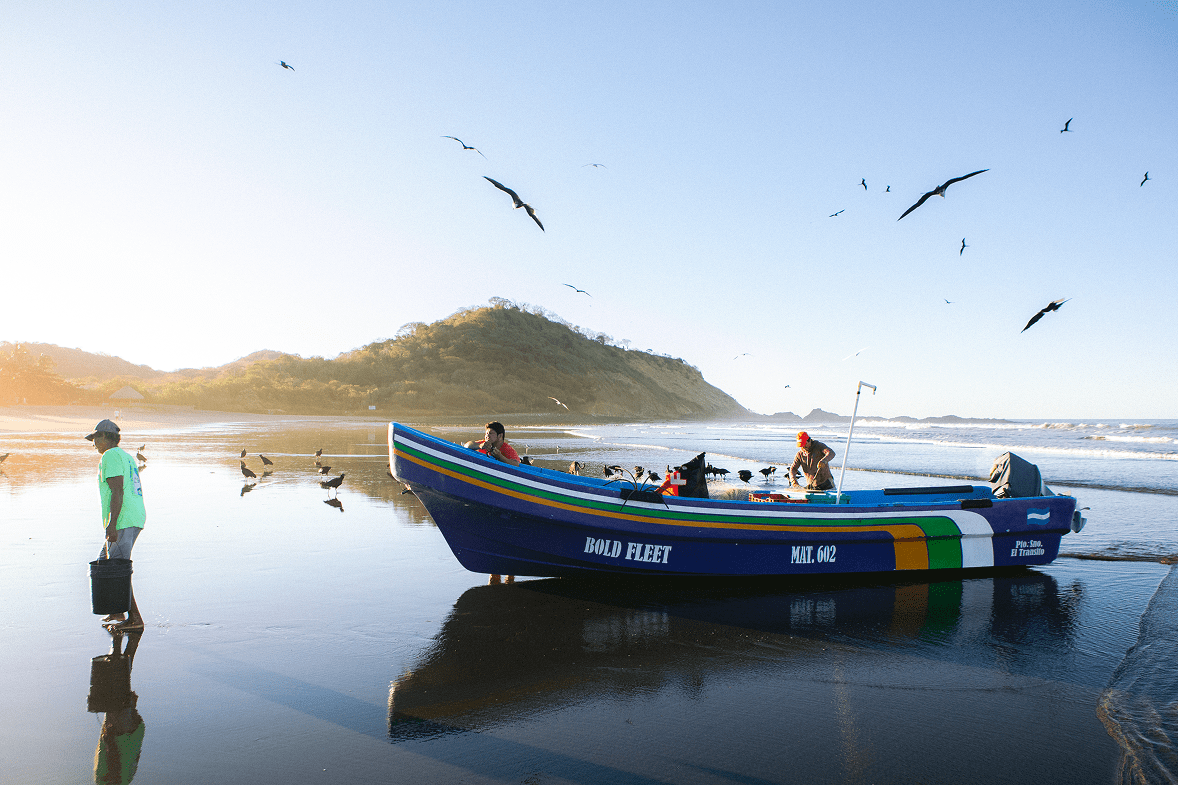
Fishing boats still leave the beach each morning.
Children still play football in the sand after school. Neighbours stop to talk in the streets.
Visitors quickly begin recognising the surfers they see every morning in the lineup, the fishermen preparing their catch and the familiar faces in the local grocery shop.
After a few days, many travellers notice something unexpected. They no longer feel like tourists simply passing through.
They begin to feel part of the rhythm of the village itself. That feeling is increasingly rare.
Is El Tránsito the right destination for you?
El Tránsito isn’t trying to appeal to everyone.
And that’s exactly why so many people fall in love with it.
If your ideal holiday revolves around nightlife, beach clubs, luxury shopping, large resorts or packed social calendars, you’ll probably be happier somewhere else.
El Tránsito offers a different kind of luxury. The luxury of silence. The luxury of empty beaches.
The luxury of reading a book while listening to the waves instead of traffic.
It’s a destination for travellers who enjoy discovering places before they become famous.
For surfers looking for uncrowded waves. For couples wanting to disconnect.
For solo travellers searching for authentic experiences.
For photographers, nature lovers and anyone who enjoys places with character rather than polished perfection.
Many guests initially book only one or two nights. After settling into the slower pace of village life, it’s surprisingly common for them to extend their stay.
A different rhythm of life
Perhaps the biggest surprise isn’t the surf.
Or the sunsets. Or even the village itself. It’s how quickly your own routine begins to change.
Within a couple of days, many visitors stop checking the time quite so often.
Instead, the tides become more important than the clock.
Mornings begin with birds singing, cool ocean air and quiet walks along an almost empty beach where pelicans glide effortlessly just above the waves.
Later in the day, surfers head into the water while others settle into a hammock with a book or join a yoga class.
As evening approaches, the beach slowly fills again—not with crowds, but with local families, fishermen returning home and travellers gathering naturally to watch another sunset.
No music. No organised events.
Just everyone enjoying the same moment in their own way.
It is often this slower rhythm—not any particular attraction—that people remember most after leaving El Tránsito.
How many days should you stay?
While El Tránsito works well as a weekend escape, it rewards travellers who stay a little longer.
That gives you enough time to experience the beach at different tides, settle into the pace of the village and discover the small details that many people miss during a short visit.
The beach changes dramatically throughout the day. Different surf conditions appear with changing tides. Morning walks feel completely different from evening strolls.
And after a few days, familiar faces begin appearing everywhere. The local surfers recognise you in the water.
The fishermen greet you on the beach.
The village grocery shop feels familiar rather than new.
By the end of the week, El Tránsito often feels less like somewhere you’ve visited—and more like somewhere you’ve briefly belonged.
The soundtrack of El Tránsito
Every destination has its own soundtrack. In El Tránsito, it isn’t traffic, nightlife or busy streets.
It’s nature.
Wake before sunrise and you’ll hear birds, waves breaking gently on the shore and the occasional rooster somewhere deeper in the village.
Throughout the day, the Pacific remains a constant presence in the background, joined by the wind moving through the palm trees, children playing outside after school and fishing boats heading out to sea.
As darkness falls, the village becomes remarkably quiet. The sound of the ocean once again takes over. One of the things many visitors remember most isn’t what they hear.
It’s what they don’t. No constant traffic. No city noise.
Just the simple soundtrack of a small Pacific fishing village.
The beach is constantly changing
One of El Tránsito’s greatest surprises is that the beach never looks exactly the same twice.
The tides transform the coastline throughout the day, creating completely different landscapes within just a few hours.
At low tide, the beach becomes wide, firm and perfect for long walks. The retreating ocean leaves beautiful rippled patterns in the sand, while shallow pools reflect the sky like mirrors.
Explore a little further and you’ll discover volcanic rock formations and natural tide pools that emerge only when the water drops.
As the tide returns, everything changes.
The ocean moves closer to the village, waves reshape the shoreline and the atmosphere becomes more intimate.
Many visitors make the mistake of walking the beach only once.
Those who experience it at both high and low tide quickly realise it feels like two completely different places.
Life moves with the ocean
In El Tránsito, the ocean doesn’t simply shape the landscape—it shapes daily life.
Early mornings belong to surfers, fishermen and anyone who enjoys the quietest hours of the day. The light is soft, the air is cooler and the beach often feels almost empty apart from a few familiar faces beginning their routines.
By late afternoon, the village slowly returns to the shoreline.
Families gather together, children play football on the sand, surfers paddle out for another session and walkers enjoy the cooler temperatures after the midday heat.
Then comes sunset. Unlike many destinations, sunset isn’t an organised attraction here.
It’s simply part of everyday life.
Some people sit quietly on the beach. Others continue surfing until the last light fades. Children keep playing while fishermen prepare for the following day.
Everyone enjoys it differently. That simple ritual says a great deal about El Tránsito.
Local food and village life
Food in El Tránsito reflects the traditions of Nicaragua’s Pacific coast.
Fresh fish naturally appears on many menus, served grilled or fried alongside rice, beans, fried plantains or crispy tostones.
Prepared from seasoned corn dough filled with meat and vegetables, wrapped in banana leaves and slowly cooked for several hours, the nacatamal is more than a meal—it’s a weekend tradition shared by families across the country.
Alongside traditional Nicaraguan cooking, visitors will also find cafés and small restaurants serving fresh seafood, healthy breakfasts, vegetarian options and international favourites.
Meals here tend to be unhurried.
People stay at the table a little longer, conversations continue after the plates are empty and the ocean is never very far away.
Wildlife and nature
Nature is part of everyday life in El Tránsito.
Pelicans glide just above the waves, often flying in perfect formation along the coastline. Herons patiently search the shallows while butterflies, iguanas and colourful lizards are common sights around the village.
Walk quietly along the beach and you’ll notice tiny crabs disappearing into the sand as you approach.
If you’re lucky—and visiting at the right time of year—you may even spot dolphins offshore or migrating whales passing along Nicaragua’s Pacific coast.
The beauty of El Tránsito isn’t that wildlife is guaranteed.
It’s that nature still feels completely at home here.
Weather throughout the year
Nicaragua has two distinct seasons, and each offers a different experience.
November to February
These months bring some of the most comfortable weather of the year, with warm sunny days, refreshing ocean breezes and cooler mornings. Many travellers consider this the ideal time for combining surfing, relaxing and exploring.
March and April
The weather becomes hotter and drier, with clear skies and plenty of sunshine. Expect strong tropical sun during the middle of the day.
May and June
The green season begins. Tropical showers gradually return, transforming the surrounding landscape into vibrant shades of green. Rain often falls in short bursts rather than lasting all day.
July and August
September and October
Typically the quietest months of the year. The landscape is at its greenest, temperatures become a little cooler and visitors looking for peace and fewer crowds often enjoy this season most.
Every time of year offers something different.
Can you work remotely from El Tránsito?
Yes—provided your expectations are realistic.
Many visitors choose El Tránsito as a place to combine work with a slower lifestyle.
Internet connections are generally suitable for emails, everyday online work and most remote tasks. Because the village relies on local wireless internet providers, connection quality can occasionally be affected by strong winds or storms.
If your work depends on uninterrupted, high-definition video calls every day, it’s worth checking with your accommodation before travelling.
For many remote workers, however, El Tránsito offers something far more valuable than perfect Wi-Fi.
It offers fewer distractions.
Is El Tránsito suitable for families?
Absolutely.
Families are drawn to El Tránsito for many of the same reasons as surfers and couples: the relaxed atmosphere, open spaces and slower pace of life.
The village has very little traffic, making it pleasant to explore on foot, while the wide beach provides endless space for children to run, play and discover nature.
Walking together to the tide pools, watching fishing boats return or simply collecting shells often becomes more memorable than organised entertainment.
As with any beach destination, children should always be supervised near the ocean, as tides and wave conditions change throughout the day.
A photographer’s paradise
If you enjoy photography, El Tránsito offers endless opportunities.
One of the finest viewpoints is the hill at the southern end of the village, where panoramic views stretch across the entire bay.
At low tide, volcanic rock formations, natural pools and reflections in the wet sand create constantly changing compositions.
Later in the day, fishermen returning from the ocean, pelicans flying low above the waves and dramatic Pacific sunsets provide unforgettable scenes.
The best photographs here aren’t usually carefully planned. They’re simply moments that happen naturally.
Practical tips before you visit
A little preparation will help you enjoy your stay even more.
- Bring enough cash, as there is currently no ATM in El Tránsito.
- Pack a hat, sunscreen and reusable water bottle. The tropical sun is stronger than many visitors expect.
- Carry a small torch or use your phone’s flashlight if walking after dark, as street lighting is limited in some parts of the village.
- If you’re planning to surf, pay attention to the tides—they significantly influence the conditions throughout the day.
- Bring mosquito repellent, particularly if you’re sensitive to bites.
- Most importantly, don’t overfill your itinerary. El Tránsito is a destination best experienced slowly.
Frequently Asked Questions
Is El Tránsito safe?
Many visitors describe El Tránsito as peaceful and welcoming. Like anywhere, sensible precautions regarding valuables and walking late at night are recommended.
Do I need a rental car?
Not necessarily. The village is compact and easy to explore on foot. A rental car is useful if you plan to visit León or nearby beaches, but many travellers simply arrange transfers or taxis.
How long should I stay?
Five to seven days allows enough time to experience the surf, village atmosphere, changing tides and slower pace of life.
Is El Tránsito only for surfers?
Not at all. Many visitors come for yoga, photography, nature, remote work or simply to disconnect beside the Pacific Ocean.
Is there an ATM?
No. It’s best to withdraw cash before leaving Managua.
Final thoughts
Some destinations are remembered for famous landmarks. Others for luxury hotels. El Tránsito is remembered for something much quieter.
For mornings when the beach feels almost empty. For sunsets shared with local families and surfers. For conversations that last longer than expected.
For the feeling that, somewhere between the changing tides and the slower rhythm of village life, everyday worries became a little less important.
It’s not a place that tries to impress you. It doesn’t need to. Its greatest strength is simply being itself.
And perhaps that’s exactly why so many travellers arrive curious… …and leave already thinking about coming back.
Continue Exploring El Tránsito
This guide is just the beginning. To help you plan your trip, weare working on creating more detailed local guides:
- Complete Surf Guide to El Tránsito
- How to Get to El Tránsito from Managua
- Is El Tránsito Safe?
- Best Time to Visit El Tránsito
- Things to Do Besides Surfing
- Where to Stay in El Tránsito
Whether you’re visiting for a long weekend or a two-week escape, we hope this guide helps you experience El Tránsito not just as a destination—but as a place you’ll remember long after you’ve returned home.