

El Tránsito is one of Nicaragua’s quieter Pacific surf destinations, with consistent waves, several different breaks and predominantly offshore winds during the dry season. From mellow longboard waves to faster, punchier peaks, this local guide covers the breaks, tides, seasons and practical knowledge worth having before you paddle out.
Why Surf El Tránsito?
El Tránsito isn’t famous for one particular wave. That’s part of what makes surfing here interesting.
The village sits on an open stretch of Nicaragua’s Pacific coast that picks up swell consistently. When some areas farther south are very small, El Tránsito can still have fun, surfable waves.
There is also plenty of variety within a relatively short stretch of beach. Depending on the tide and swell, you can move between a left point, a softer protected beach break, several sandy peaks and a faster, punchier wave farther north.
The waves generally have enough push to generate speed without always being excessively fast or hollow. For intermediate surfers in particular, this can be ideal: there is often time to read the wave, work on positioning and practise turns instead of simply racing to stay ahead of the next section.
Longboarders and progressing beginners can find excellent conditions too, especially during the smaller dry-season months.
Then there is the atmosphere. El Tránsito is still a small fishing village rather than a developed surf town. There are several peaks along a large beach, the local surf community is relatively small and the lineup generally feels friendly. January and February are noticeably busier, but there is usually space to move around.
And when you’re sitting beyond the break waiting for a set, the view back towards the village and surrounding coastline is beautiful.
In short: El Tránsito is less about chasing Nicaragua’s heaviest wave and more about consistent surf, variety, space and waves that give you time to enjoy your surfing.
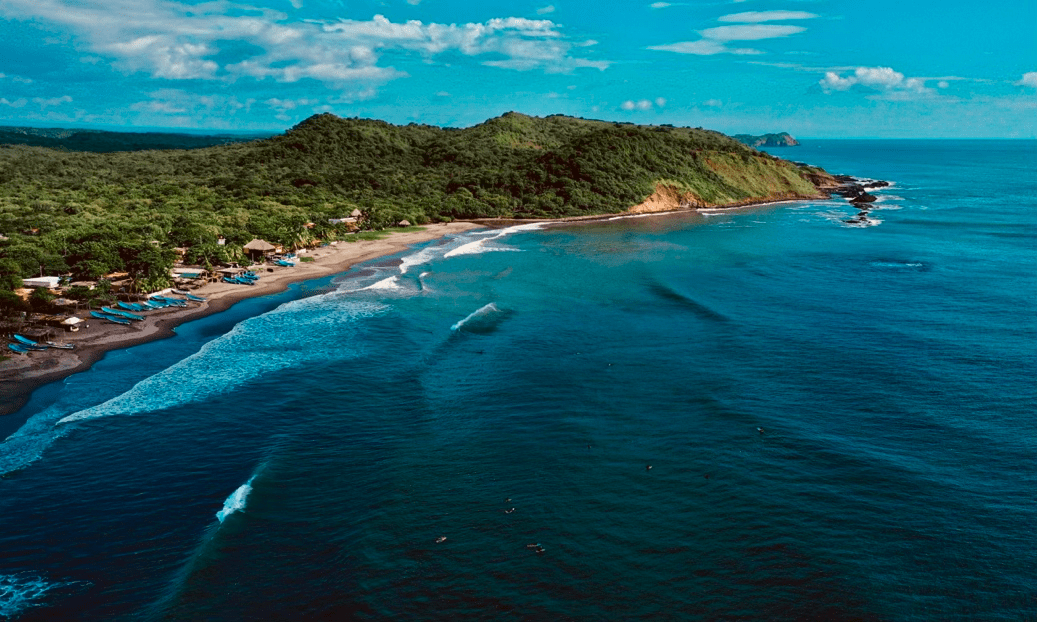
El Tránsito Surf Breaks: South to North
One of the best ways to understand surfing in El Tránsito is to walk the beach.
The breaks respond differently to the tide, so a wave that looks poor at one end of the village can coincide with very good conditions somewhere else.
Starting at the southern end and moving north, these are the main breaks.
1. The Left Point
Directly in front of Alive Beach House is a left-hand point break.
The take-off can have some punch, but after that the wave generally becomes softer and can offer a relatively long, smooth wall. It’s a particularly enjoyable wave for surfers who want enough power to work on turns without having to race constantly down the line.
The point responds particularly well to south and southwest swell and tends to be at its best from around February through May.
It generally prefers the lower half of the tide, from low to mid tide.
There are rocks around the point, although they are rounded rather than sharp. Surfers should still know where they are and pay attention to the water depth as the tide falls.
Best for: progressing intermediate and intermediate surfers
Direction: left
Best tide: low to mid and mid to low
Character: punchier take-off followed by a softer, longer wall
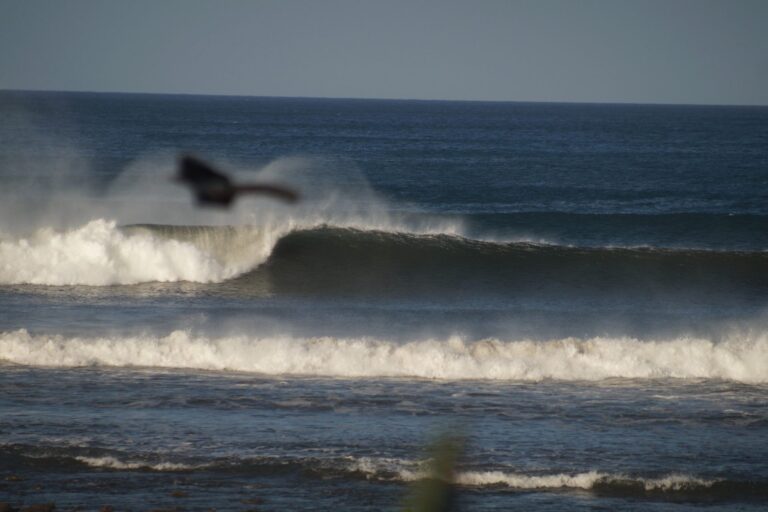
2. The Protected Beach Break
Immediately to the right of the point is a very different wave.
A rock formation farther offshore takes some of the energy out of the incoming swell before it reaches the beach. This can create a softer, smoother beach break with both lefts and rights.
It works particularly well around high tide.
This is generally the preferred area for beginner lessons because the waves tend to be more forgiving. It can also be excellent for longboarding when the swell is small.
On the right day, progressing beginners can move from practising in the whitewater to catching small green waves here without immediately having to deal with a fast or powerful take-off.
Best for: beginners, progressing surfers and longboarders
Direction: lefts and rights
Best tide: high
Character: softer and more forgiving
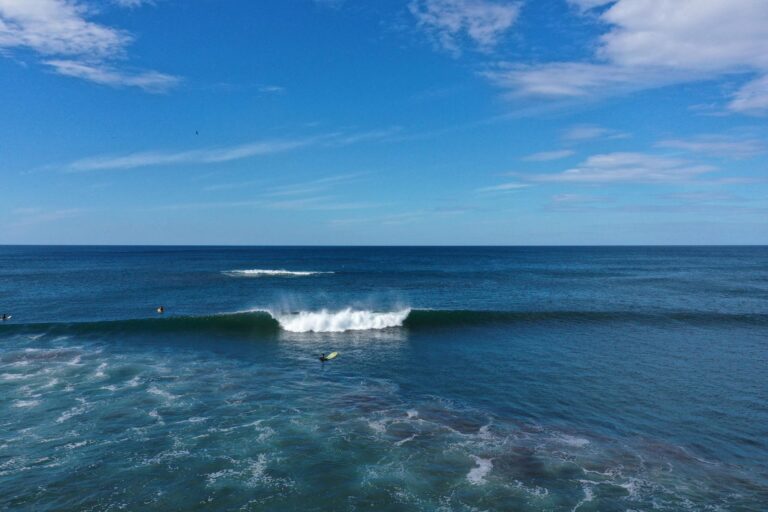
3. Pangas
Continue north and you reach an A-frame known locally as Pangas, named after the fishing boats in front of it.
The wave breaks both ways, although the left is often the better side.
There is one important thing to understand before surfing here: this part of the ocean is also a working area for local fishermen.
Fishing boats commonly return from sea in the morning, roughly between 6:30 and 8:00 a.m., and leave again in the late afternoon, often around 4:30 to 5:30 p.m. These times can vary, so don’t rely on the clock alone. Look around, stay alert and always give boats plenty of room.
El Tránsito may be a surf destination, but it is a fishing village first.
Best for: independent surfers
Wave: A-frame, with a particularly good left
Important: watch for fishing boats and give them priority
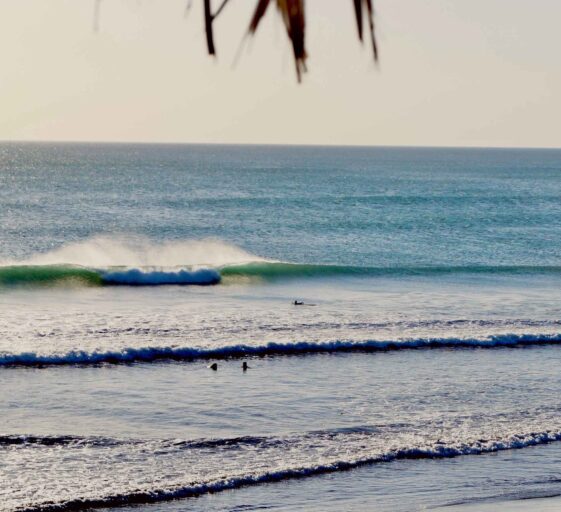
4. The Main Beach Breaks
Farther north from Pangas are several sandy peaks that form El Tránsito’s main beach-break area.
These are among the most consistent waves in the village, with both lefts and rights and enough room for surfers to spread between different peaks.
Because the bottom is sand, the exact position and shape of the waves can change as the sandbanks move.
The beach breaks generally improve as the tide rises from mid towards high. They can remain good as the tide begins dropping, although backwash sometimes appears around the high-to-mid transition.
Once the tide moves farther towards low, the waves become more prone to closing out. That is often the time to start looking back towards the point or farther north towards Pistols.
Best for: intermediate and experienced surfers
Direction: lefts and rights
Bottom: sand
Best tide: mid to high
Character: consistent, changing peaks with plenty of options
5. Pistols
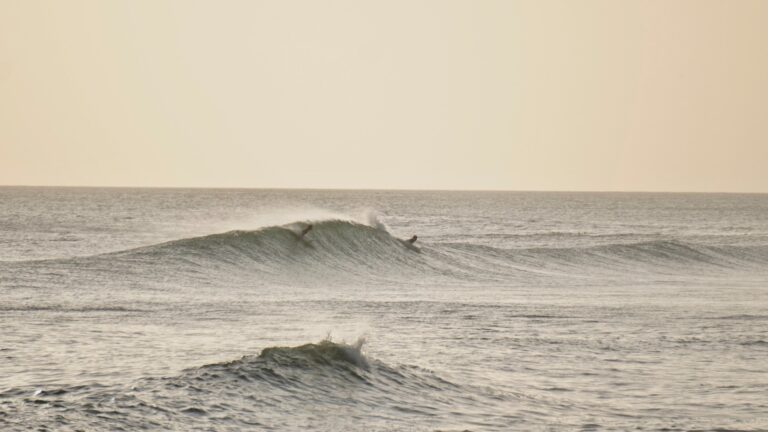
At the northern end of the surf zone, Pistols offers something more demanding.
It is considerably less consistent than the main beach breaks, but when it works, the wave is shorter, faster and punchier and can sometimes barrel.
Pistos generally works around low to low-mid tide and is better suited to experienced surfers.
There are rocks and shallow sections, so it isn’t a wave we would recommend to beginners. For advanced surfers who find the other El Tránsito waves too forgiving, however, Pistols can be well worth checking.
Best for: experienced and advanced surfers
Direction: lefts and rights
Best tide: low to low-mid
Character: fast, punchy and sometimes barreling
Watch for: rocks and shallow sections
How the Tide Changes the Surf in El Tránsito
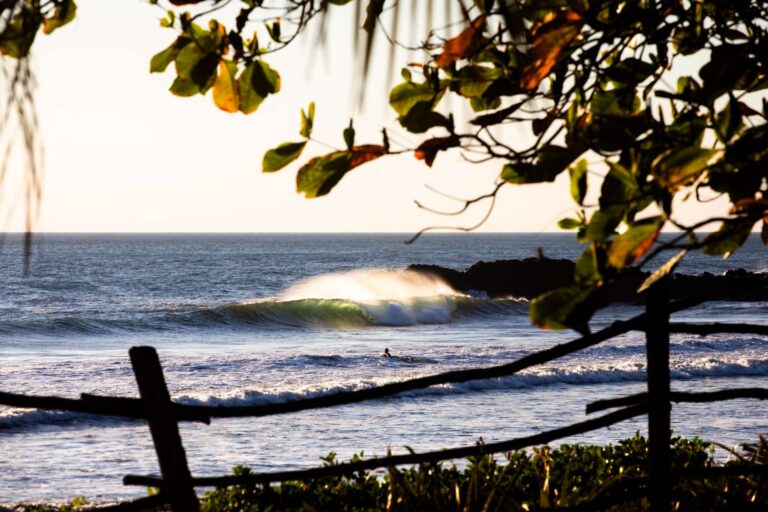
There is no single “best tide” for El Tránsito.
Instead, the best strategy is often to move with the tide.
A useful local rule of thumb is:
|
Tide |
Where to Look |
|
Low |
Left point or Pistos |
|
Low → Mid |
Left point |
|
Mid |
Point + start checking the beach breaks |
|
Mid → High |
Main beach breaks |
|
High |
Protected beach break + main breaks |
|
High → Mid |
Beach breaks; occasional backwash |
|
Mid → Low |
More closeouts; check the point or Pistols |
This is a starting point rather than a guarantee. Swell size, swell direction, wind and changing sandbanks all affect what actually happens.
At high tide, the waves generally become fuller and mellower. This is when the protected beach break becomes particularly interesting and when longboarders should be paying attention.
As the tide falls towards mid, the main beach breaks can continue working well, although backwash occasionally affects the wave quality.
Once the tide moves farther towards low, some of the sandy peaks become more prone to closeouts. Meanwhile, the left point and Pistols become more interesting.
Local tip: Don’t stand in front of one peak and decide El Tránsito isn’t working. Walk the beach. Understanding the tide can completely change your surf day.
Is El Tránsito Good for Beginners?
Yes — when the conditions are right.
A complete beginner should normally start on a large soft-top board, around 8 feet depending on the surfer, and learn in the whitewater.
The protected beach break is usually the preferred learning area because it tends to be softer and easier to manage. Pangas is best avoided by beginners because of the fishing-boat traffic, while Pistos is a more advanced wave.
Conditions matter just as much as the break.
On a bigger swell, even the whitewater can become powerful. Very strong offshore wind can also make a large board surprisingly difficult for an inexperienced surfer to control, particularly during a wipeout.
During smaller dry-season conditions, however, El Tránsito can be an excellent place to learn. When the waves are around 1–3 feet, there are days when progressing beginners can move beyond the whitewater and begin catching small green waves.
For someone starting from zero, several lessons combined with independent practice generally make more sense than expecting to learn everything in one class. Around four or five initial lessons can provide a useful foundation, followed by more instruction when the surfer is ready to transition to green waves.
Why Intermediate Surfers Often Love El Tránsito
This may be El Tránsito’s real sweet spot.
There is a huge stage in surfing between being able to catch a green wave and knowing how to use that wave well.
Many intermediate surfers can paddle out independently and surf down the line, but are still working on bottom turns, cutbacks, speed generation, positioning and reading different sections.
El Tránsito’s waves are particularly useful for this because they often have enough push without being excessively fast.
That extra time matters. Instead of simply reacting to the wave, you can look ahead, choose a line and try a manoeuvre. On longer rides, you may get several opportunities to practise during the same wave.
Local coaching can be useful at this stage too. An intermediate surfer doesn’t need to relearn how to stand up; they may simply need help understanding where to sit, which waves to choose, which break suits the tide and what they can improve once they are on the wave.
For a surfer visiting for only a week, a few focused sessions can save a lot of trial and error.
Advanced Surfers and Longboarders
Advanced surfers can certainly have fun in El Tránsito, particularly when larger swell arrives. Pistols offers the fastest and punchiest option, while stronger swells bring more power to the other breaks.
Surfers travelling specifically for heavy barrels and more technical waves, however, may eventually want to explore nearby Puerto Sandino or Miramar.
At the other end of the spectrum, longboarding can be excellent in El Tránsito.
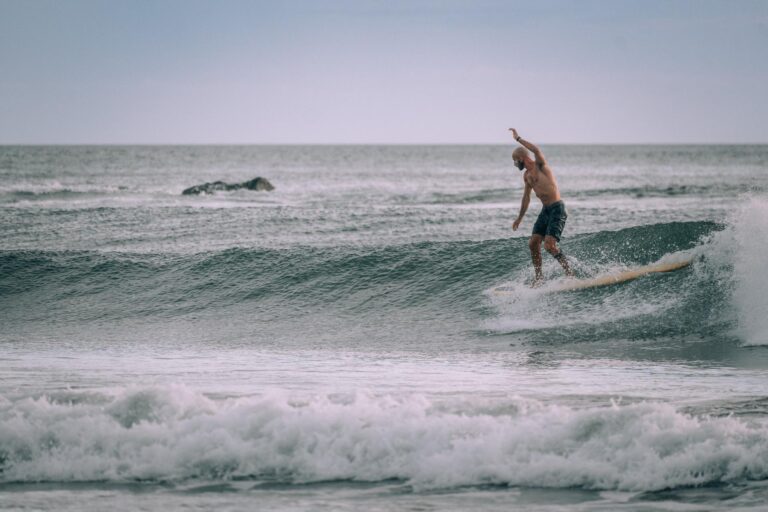
The protected beach break around high tide and the main sandy peaks are particularly worth checking when the swell is small. Waves around 2–3 feet or below can produce very enjoyable longboard conditions, especially during the dry season.
This is also why board choice matters here. Many of El Tránsito’s waves are relatively full and smooth, so a little extra volume is often more useful than an extremely thin performance shortboard.
As a rough guide, a complete beginner might use an 8-foot soft-top, a progressing surfer around 7 feet, intermediates often do well on higher-volume boards in the 6–7-foot range, and longboarders around 9 feet. Experienced surfers can move towards shorter equipment when larger swell provides enough power.
These are guidelines, not rules. Your size, ability, fitness and board design matter more than length alone.
The main lesson is simple: don’t underestimate how much fun a bigger board can be in El Tránsito.
When Is the Best Time to Surf El Tránsito?
This is where the answer becomes more interesting than simply choosing between Nicaragua’s dry and rainy seasons.
The months with the most reliable offshore winds are not necessarily the months with the biggest waves. The quietest periods are not always the most predictable, and the ideal season for a longboarder may be completely different from the best season for someone looking for more powerful surf.
November through February generally brings smaller, consistent waves and the most reliable offshore winds. March and April bring more size and power. The rainy season can produce excellent surf too, but conditions become more variable.
And there is one period in the middle of the green season that surfers often overlook.
Surfing El Tránsito Throughout the Year
There isn’t one perfect month to surf El Tránsito. The best time depends on what you want from the trip: smaller clean waves, more swell, fewer people or the most reliable offshore winds.
Here is how the year typically changes.
November to February: Smaller, Clean and Consistent
For many surfers, November through February is one of the easiest periods to enjoy El Tránsito.
This is the dry season. Swells tend to be smaller, but the waves are very consistent and offshore winds are at their most reliable. Because El Tránsito sits on an open stretch of coastline, it can still pick up fun waves when some areas farther south are very small.
These months are particularly good for longboarders, progressing beginners and intermediate surfers.
November and December tend to be quieter. January and February are high season, so there are noticeably more surfers around, although the beach generally remains relaxed compared with heavily developed surf destinations.
If you want manageable waves, plenty of opportunities to surf and a good chance of offshore conditions, this is a very reliable period.
March and April: More Swell and More Power
By March, El Tránsito starts to change.
The weather becomes hotter, while swells begin to increase in size. Offshore winds are still common, particularly earlier in this period, but conditions gradually become less predictable than during the core dry-season months.
There can be weeks of excellent medium-sized surf, mixed with occasional larger swells.
This is also an interesting period for the left point, particularly when south and southwest swell arrives.
For intermediate and experienced surfers looking for more power without being deep into the rainy season, March and April can be an excellent choice.
May and June: Unpredictable but Sometimes Magical
May marks the beginning of the rainy season, and conditions become harder to predict.
There can be storms, prolonged onshore winds and periods when the ocean is simply too messy. Larger swells also become more likely.
But there is another side to May and June.
Tourism drops dramatically, the landscape turns green and there can be very few surfers in the water. A stormy period can suddenly be followed by several days of clean waves, light offshore wind and beautiful water.
When everything comes together, these can be some of the most memorable sessions of the year.
For a short surf holiday where you need reliable waves every day, May and June involve more risk. For someone staying longer and happy to adapt to the weather, they can be very rewarding.
July and August: The Underrated Surf Window
July and August are easy to overlook, but they can be a very good time to surf El Tránsito.
This period often brings a temporary reduction in rainfall during the green season, sometimes known as the veranillo or “little summer”.
The coastline is lush and green, the weather is warm and conditions can be more settled than during the stormier parts of the rainy season. There are often medium-sized swells, with occasional larger pulses, and generally far fewer surfers than during January and February.
For intermediate surfers in particular, July and August can offer an excellent balance of swell, good conditions and fewer people in the water.
September and October: More of a Gamble
Conditions become increasingly unpredictable towards the end of the rainy season.
Early September can still produce good surf, but storms, rain and onshore winds become more common as the season progresses. Larger swells can also make the ocean messy rather than better.
October is generally the riskiest month for planning a dedicated surf trip if having reliable surfable conditions is your priority.
Good days certainly happen. The difficulty is predicting them far enough in advance to plan a holiday around them.
|
Period |
Typical Conditions |
Particularly Good For |
|
Nov–Feb |
Smaller, consistent surf; reliable offshore winds |
Beginners, longboarders, intermediates |
|
Mar–Apr |
Increasing swell and power |
Intermediate and advanced surfers |
|
May–Jun |
Variable, quiet, bigger swell potential |
Flexible surfers |
|
Jul–Aug |
Good swell potential, green coastline, fewer surfers |
Intermediate and experienced surfers |
|
Sep–Oct |
Stormier and less predictable |
Experienced, flexible surfers |
These are typical local patterns, not a surf forecast. Wind, swell direction, storms, tides and sandbanks can make two days in the same month completely different.
What About El Tránsito’s Offshore Winds?
Nicaragua is famous for offshore winds, but it is misleading to assume that means offshore all day, every day.
In El Tránsito, the most consistent offshore pattern generally occurs from November until around mid-March. During this period, days can begin with moderate or strong offshore wind and sometimes remain offshore for much of the day.
Stronger isn’t necessarily better. Very strong offshore wind can make paddling and catching waves more difficult. During a wipeout, it can also catch the board and blow it back towards the surfer, something beginners in particular should be aware of.
From March onwards, the pattern becomes more variable. During the rainy season, storms and changing weather can bring periods of onshore wind alongside clean offshore sessions.
At that time of year, it pays to be flexible: look at the ocean rather than assuming a particular hour will always be best.
How Crowded Is El Tránsito?
El Tránsito isn’t an empty secret spot, and it shouldn’t be presented as one.
But there is a lot of beach and more than one peak, so surfers have room to spread out.
Most people in the water are travelling surfers, alongside a relatively small community of Nicaraguan surfers and foreign residents who live locally.
January and February are noticeably busier. During quieter periods, particularly parts of the rainy season, there may be very few surfers around.
More important than the number of people is the atmosphere. The lineup is generally friendly and less competitive than many well-known surf destinations.
Keeping it that way depends on visitors respecting basic surf etiquette.
Surf Etiquette and the Fishing Community
The normal rules apply: don’t drop in, don’t snake, don’t paddle directly through someone’s wave and respect whose turn it is.
If you’re still learning, avoid positioning yourself in the middle of a busy take-off zone until you can control your board confidently.
There is also something specific to El Tránsito that every visiting surfer should understand.
Around Pangas, you are sharing the ocean with working fishermen.
Give fishing boats plenty of room and move clearly out of their path. This is particularly important when boats return in the early morning and head back to sea in the late afternoon.
Surfing is part of El Tránsito today, but fishing has shaped the village for generations. Respecting that relationship is part of surfing here.
Surf Safety in El Tránsito
El Tránsito has waves for different levels, but there are a few local hazards worth knowing.
The left point has rounded rocks, particularly important to keep in mind as the tide drops. Pistols has rocks and shallow sections, which is one reason it is better suited to experienced surfers.
At Pangas, fishing boats are the main thing to watch.
Strong offshore wind also deserves respect. During a wipeout, protect your head and be conscious of where your board is going.
And when a large swell arrives, don’t underestimate the power of the ocean. If you aren’t comfortable duck-diving strong whitewater or handling yourself in bigger surf, it is better to wait for conditions that match your ability.
There will always be another session.
Surfing Beyond El Tránsito
If you are staying for a week or longer, El Tránsito can also be a useful base for exploring this part of Nicaragua’s coastline.
Nearby Puerto Sandino and Miramar offer additional beach breaks as well as more challenging waves for experienced surfers looking for faster, more powerful and barreling conditions.
South of El Tránsito, the Asunchillo and Playa Grande area can be explored by boat, opening access to a long, largely undeveloped stretch of coastline with beach-break possibilities and very few surfers.
There are also lesser-known waves nearby whose locations are better discovered locally rather than published online.
We’ll cover the established nearby options properly in a separate Surf Spots Near El Tránsito guide.
Surf Lessons, Coaching and Board Rentals
For complete beginners, lessons should focus on the fundamentals: board control, paddling, positioning, standing up safely and understanding the ocean.
A large soft-top board is usually the best place to start. Several lessons combined with independent practice in manageable whitewater can build a much stronger foundation than expecting everything to happen in one class.
For intermediate surfers, coaching has a different purpose.
A local coach can help you understand which break suits the tide, where to position yourself, which waves to choose and how to improve your turns and manoeuvres. Even a few focused sessions can save considerable trial and error when you only have a week to surf.
Surf lessons, coaching and board rentals can be arranged through Alive Beach House.

Frequently Asked Questions About Surfing El Tránsito
Is El Tránsito good for beginners?
Yes, when conditions are suitable. The protected beach break is generally the preferred learning area. Big swells, very strong offshore winds, Pistos and the boat area around Pangas are not suitable for complete beginners.
Is El Tránsito good for intermediate surfers?
Yes. This may actually be the level for which El Tránsito is most interesting. Many waves have enough power to practise proper manoeuvres while remaining smooth enough to give surfers time to read the wave.
What is the best tide to surf El Tránsito?
It depends on the break. The left point and Pistos favour lower tides, while the main beach breaks generally improve from mid towards high tide. The protected beach break works particularly well around high tide.
What is the best time of year to surf El Tránsito?
For smaller, consistent waves and reliable offshore winds, November through February is an excellent choice. March and April bring more swell, while July and August can offer a good combination of waves and fewer surfers.
Is El Tránsito good for longboarding?
Yes. Smaller dry-season swells can be excellent for longboarding, particularly around high tide at the protected beach break and main sandy peaks.
Is El Tránsito crowded?
January and February are the busiest months, but there are several peaks spread along a large beach. Outside peak season, the lineup can be remarkably quiet.
Is El Tránsito Worth a Surf Trip?
For many surfers, absolutely.
What makes El Tránsito special isn’t one famous wave. It’s the combination of consistency, variety and space.
You can surf the point when the tide is lower, move towards the sandy beach breaks as the water rises and finish with a mellow longboard session around high tide. Beginners can learn in softer conditions, while intermediate surfers have the time and space to work on their surfing. When more swell arrives, experienced surfers have punchier waves to explore.
But some of the best things about surfing here have nothing to do with a forecast.
The village hasn’t been transformed into a large surf resort. Fishing boats still leave for sea, the lineup generally feels friendly, and there is usually room to move between peaks rather than compete for one wave all day.
And when you’re sitting beyond the break waiting for the next set, the view back towards El Tránsito is beautiful.
Fewer people, friendly local surfers, smooth waves and enough variety to keep every tide interesting — that’s what makes surfing El Tránsito special.
Continue Exploring El Tránsito
The Complete Guide to El Tránsito, Nicaragua — village life, weather, food, nature, safety and practical travel information.
How to Get to El Tránsito from Managua (coming soon) — transfers, driving and what to expect on the journey.
Surf Spots Near El Tránsito (coming soon) — Puerto Sandino, Miramar and other surf options along this part of Nicaragua’s Pacific coast.
Best Time to Visit El Tránsito (coming soon) — a month-by-month guide to weather, surf, crowds and the green season.
Surf conditions change constantly. This guide describes typical local patterns rather than providing a real-time surf forecast. Always assess the conditions on the day and surf within your ability.